

Importing a Car from Germany or Europe into Belgium: 21% VAT, Customs E-Car 705, Inspection, and Registration Tax
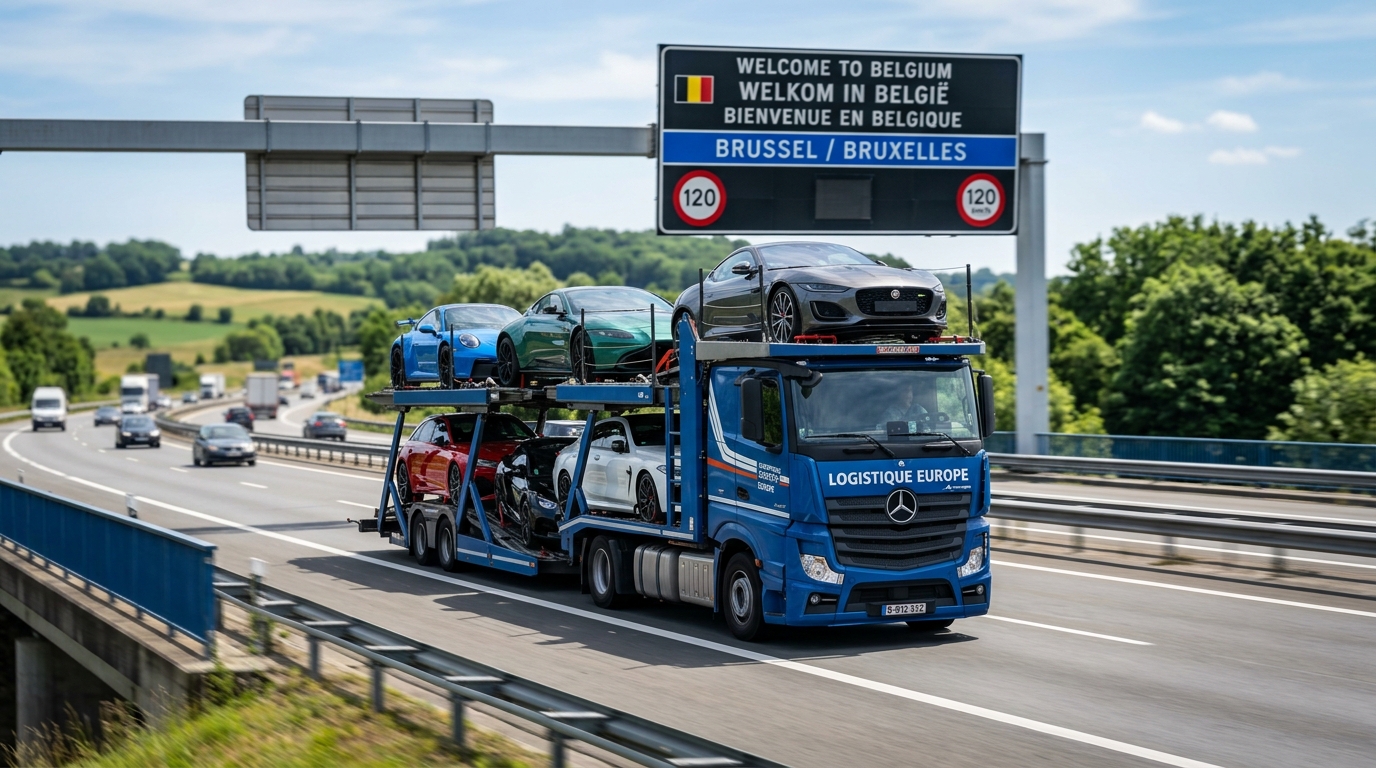
The German and wider European car market provides exceptional opportunities: a vast supply of high-spec recent pre-owned cars, rigorous maintenance standards, and prices typically 10% to 25% lower than in Belgium. However, cross-border vehicle importation requires strict procedural accuracy. Navigating the legal definition of a 'new vehicle' for VAT purposes, completing digital customs clearance via the E-Car system (Vignette 705), passing the Belgian import roadworthiness inspection, and computing regional entry taxes can quickly turn complex without proper guidance.
1. The Critical VAT Rule: Article 8bis of the Belgian VAT Code
The most crucial financial rule when buying a vehicle abroad relates to intra-community VAT. In European tax law, the definition of a 'used car' differs substantially from colloquial understanding.
Under Article 8bis, § 2, 1° of the Belgian VAT Code, a vehicle is legally treated as NEW if it satisfies either of the following two thresholds at the time of delivery:
Delivery occurs within 6 months of initial registration in the country of origin.
The odometer displays strictly less than 6,000 km at the moment of purchase.
If a car meets either condition, Belgian VAT of 21% must be paid in Belgium upon customs clearance. The car must be bought net of foreign VAT. Paying local foreign VAT by accident does not waive your liability in Belgium.
2. Digital Customs Clearance: The E-Car 705 Signal
Upon arrival in Belgium, the vehicle must be registered with the Belgian Customs and Excise Administration through the E-Car application on MyMinfin. Once verified, customs automatically transmits an electronic Signal 705 to the DIV vehicle database.
3. Transport and German Transit Plates
To legally drive the car to Belgium, obtain official German export transit plates with a red band (Ausfuhrkennzeichen), which include valid international liability insurance. Yellow-band plates (Kurzzeitkennzeichen) are intended solely for local domestic tests in Germany and can trigger police fines if operated by Belgian residents in Belgium.
4. Technical Inspection and Regional Registration Taxes
The vehicle must undergo an official import inspection at an accredited Belgian test center (Autosecurité, AIBV, SBAT) to confirm European conformity (COC check) and roadworthiness. The center validates the pink DIV registration form and prints a Car-Pass certificate. Finally, your regional tax authority (Vlabel in Flanders or SPW in Wallonia) will calculate your entry registration tax (BIV / TMC) based on regional parameters.
Estimate your taxes for this vehicle
Use our free calculator to estimate registration tax (BIV/TMC), annual road tax, and corporate BIK.